Although the newly amended Land Law only took effect in 2024, the recently published draft of the 2026 Land Law (Amendment) has sparked heated public debate.

If this bill is officially passed by the National Assembly at its upcoming October 2026 session, a series of key provisions regarding land expropriation and marine resource management will be altered in a way that unduly favors investors.
Notably, the draft proposes allowing the expropriation of citizens’ land before compensation agreements are finalized for socio-economic development projects, including those led by private investors.
In addition, new regulations on land reclamation in six sensitive areas—which have been strictly protected until now—are proposed to be relaxed, eliminating the previous requirement to obtain permission from the National Assembly or the Prime Minister.
Granting the “special privilege” of expropriating land first and negotiating compensation later for projects, coupled with a lax decentralization mechanism in coastal reclamation planning, has sparked deep public concern about the interference of private interest groups in the legislative revision process.
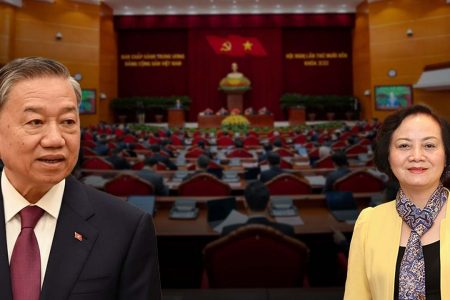
Amid growing public outrage, at a meeting on September 9, 2026, regarding the review and amendment of the “Land Law, Housing Law, and Real Estate Business Law,” Prime Minister Le Minh Hung issued strong directives serving as a direct warning to the drafting agency.
Accordingly, the Prime Minister instructed the Ministry of Justice, along with relevant ministries and agencies, to ensure absolute consistency within the legal system. He firmly insisted that there must be no situation where “a law, having just been passed by the National Assembly, immediately becomes deadlocked due to conflicts with other laws.”
At the same time, from the perspective of state management, Prime Minister Le Minh Hung bluntly emphasized the phenomenon of “laws being enacted but not implemented, and this cannot be considered a technical error.”
According to Prime Minister Hưng, for citizens and the business community, a legal loophole or contradiction will result in very concrete consequences.
Consequently, a house cannot be built, a project is frozen, a land registration file is indefinitely suspended, and citizens’ legal property rights are continuously violated.
Mr. Hung further noted that the greatest danger in public administration does not lie in a single poorly drafted law, but in the “gray areas” between laws governing housing, investment, urban planning, taxation, and so on.
Another risk highlighted by the head of the government is the situation where “the central government reduces procedures, but local authorities find every way to increase paperwork.”
Consequently, even when policies on paper call for reducing administrative procedures, if local enforcement agencies arbitrarily “invent” additional regulations or demand unnecessary supplementary documents, all reform efforts by the government remain merely on paper.
Furthermore, Prime Minister Le Minh Hung also called for a rigorous review of transitional provisions to avoid creating loopholes—that is, legal gaps—during the transition period.
According to public administration experts, the quality of a law cannot be measured by the number of amended provisions, but must be evaluated by the number of actual bottlenecks that have been resolved.
When the current overlapping legal system forces citizens to go from one agency to another seeking answers, the responsibility cannot be shifted to the public due to a lack of legal knowledge.
Therefore, the drafting agency must bear full responsibility for the policy, the reviewing agency must identify conflicts of interest, and the enforcing agency must have the obligation to explain the consistency of the law.