According to international observers, amid the undercurrents of an economy reeling from inflationary pressures and the burden of bad debt, rumors that the Vietnamese government is considering a currency redesign—cutting off three zeros—have become a major source of anxiety in society.
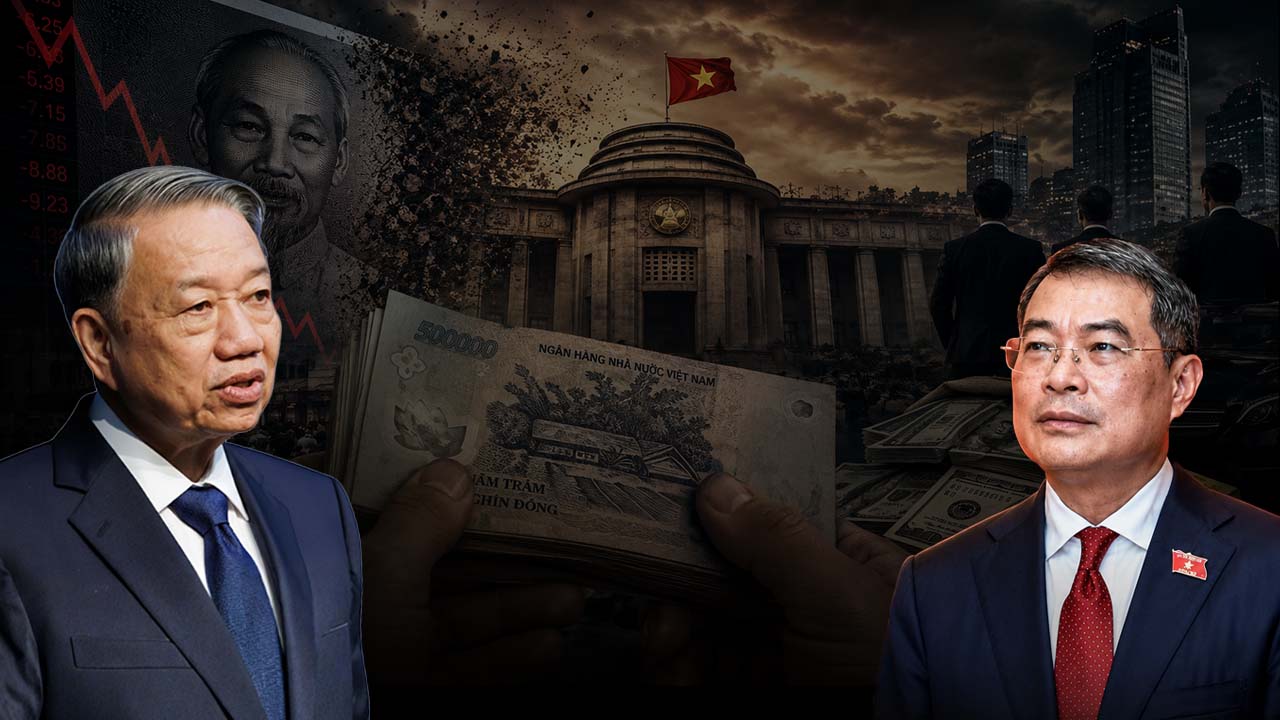
Although there has been no official announcement from the State Bank of Vietnam, unease has spread rapidly—especially given that the previous currency reform in 1985 marked the beginning of a period of runaway hyperinflation with no way out.
Against the backdrop of the Ba Dinh leadership pouring all its resources into bailing out the “red oligarchs” at any cost—despite inflationary pressures—the question at hand is not merely a monetary issue, but the very stability of the entire national financial system, which is teetering on the brink due to this high-risk policy decision.
Theoretically, removing three zeros from the currency’s denomination—a mere adjustment in the unit of measurement, where 100 million old dong would become 100,000 new dong—would not diminish the public’s net worth.
However, if actually implemented, this would be a life-or-death overhaul of the entire national financial infrastructure—a financial version of the Y2K crisis that any country would dread.
Imagine the entire banking system, ATMs, corporate accounting software, electronic invoices, etc.—along with millions of loan contracts and savings accounts—all having to be synchronized to reflect the new currency value at the exact same moment.
This is not only a massive financial burden but also carries the risk of system failures that could paralyze the entire economy in the short term, creating unprecedented chaos and inadvertently triggering price spikes for a wide range of essential goods.
But the most frightening risk lies in crowd psychology and the fragile confidence in the economy. Currency conversion, which is always synonymous with instability, is a sign of an economy that is exhausted and has lost the ability to control inflation.
If this policy is implemented while the Vietnamese economy is under significant pressure as it is today, it will become an extremely powerful psychological shock, triggering a wave of panic that will drive people to rush to buy gold and foreign currency to preserve their assets.
The history of countries that have weathered inflationary storms, such as Zimbabwe, serves as a costly lesson on how a currency can rapidly lose value when confidence erodes to its absolute limit.
When the public collectively flees the domestic currency, demand for gold and the U.S. dollar will surge, driving prices skyward and pushing already severe inflation completely out of control.
Foreign investors will have to immediately reassess risks if they suspect that the currency conversion is merely a stepping stone toward foreign exchange controls or restrictions on remittances abroad.
In that case, the withdrawal of investors will not only slow economic growth but also put an end to efforts to attract capital to rescue crony conglomerates drowning in debt.
From the government’s perspective, if the goal of the currency revaluation is to mask currency depreciation or to create new financial space for loans to oligarchs, it is nothing short of a life-or-death gamble.
Pampering special interest groups with risky monetary policies like those described not only challenges the sustainability of the economy but also tests the patience of tens of millions of citizens struggling through a price surge.
When monetary policy is tightly tied to the goal of bailing out collapsing “red capitalist” empires, it is the people who end up bearing the most painful consequences.
Trà My – Thoibao.de